Why it matters now
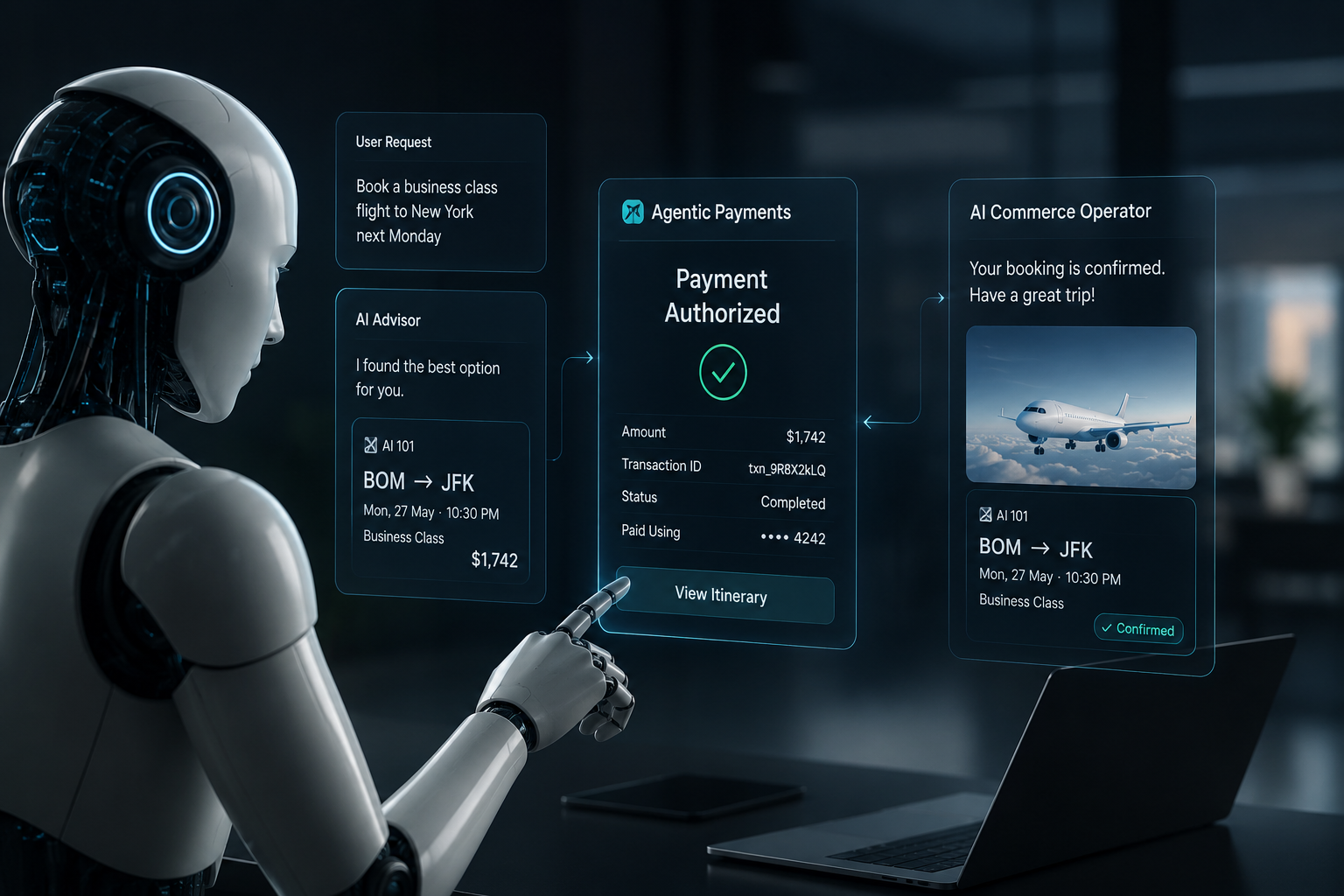
This has become urgent because enterprises are moving from passive assistants to agents that query systems, trigger workflows, and take real actions. Recent market attention on companies building authorization infrastructure for AI agents reflects a genuine architectural gap. Traditional identity models assume a human actor or a static service account. AI agents create a more dynamic problem: permissions must reflect intent, task scope, policy, and runtime context, not just a login state.
How it works in practice
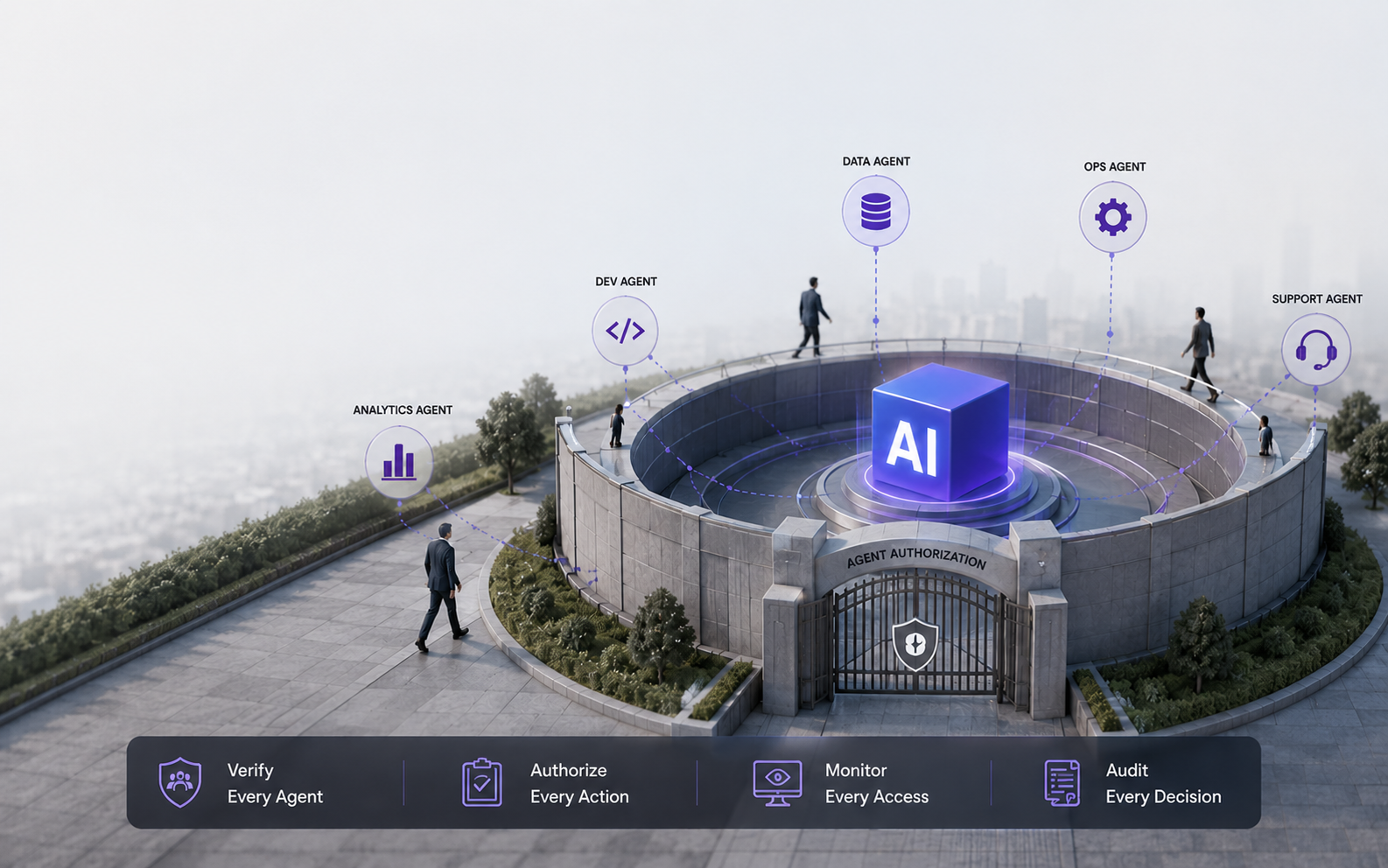
A sound implementation separates reasoning from execution. The model can propose an action, but a policy layer decides whether that action is permitted, under which credentials, against which systems, and with what logging. Least privilege becomes task-specific rather than role-generic. Approval gates can be inserted for sensitive steps, while low-risk actions remain automated. Runtime enforcement should record the requested tool, the approved parameters, the source context, and the final outcome so incident response teams can reconstruct what happened. This is closer to zero-trust design than to chatbot access management.
Real-world examples
Identity vendors are adapting
Companies such as Okta and Microsoft are increasingly framing machine and non-human identity as part of the AI control problem.
Network and platform security are converging
Vendors including Palo Alto Networks are expanding their security narratives around agent access, policy enforcement, and observability.
New startups are targeting the gap directly
A new category of tooling focuses on scoped agent gateways, runtime authorization, and action auditing because existing enterprise stacks were not built for autonomous software actors.
Zero-trust ideas are becoming operational
The strongest pattern resembles zero-trust design: never assume a model should execute just because it can reason about the action.
Pitfalls to avoid
- Handing agents broad human tokens Giving an agent a full user token or a wide service account creates a large blast radius that observability alone cannot compensate for.
- Using prompts as a security boundary Prompt instructions are guidance, not enforcement. Real controls need runtime policy checks and scoped credentials.
- Ignoring tool-chaining risk Individually safe permissions can become dangerous when combined across CRM, ERP, email, and file systems.
- Leaving machine identity ownership unclear If nobody clearly owns rotation, review, and deprovisioning for agent identities, the security model degrades quickly.
Frequently asked questions
Conclusion
The new AI security boundary is not access to the model itself. It is controlled execution inside enterprise systems, and the teams that design for scoped authority and traceable actions will reduce risk without blocking progress.