Why it matters now
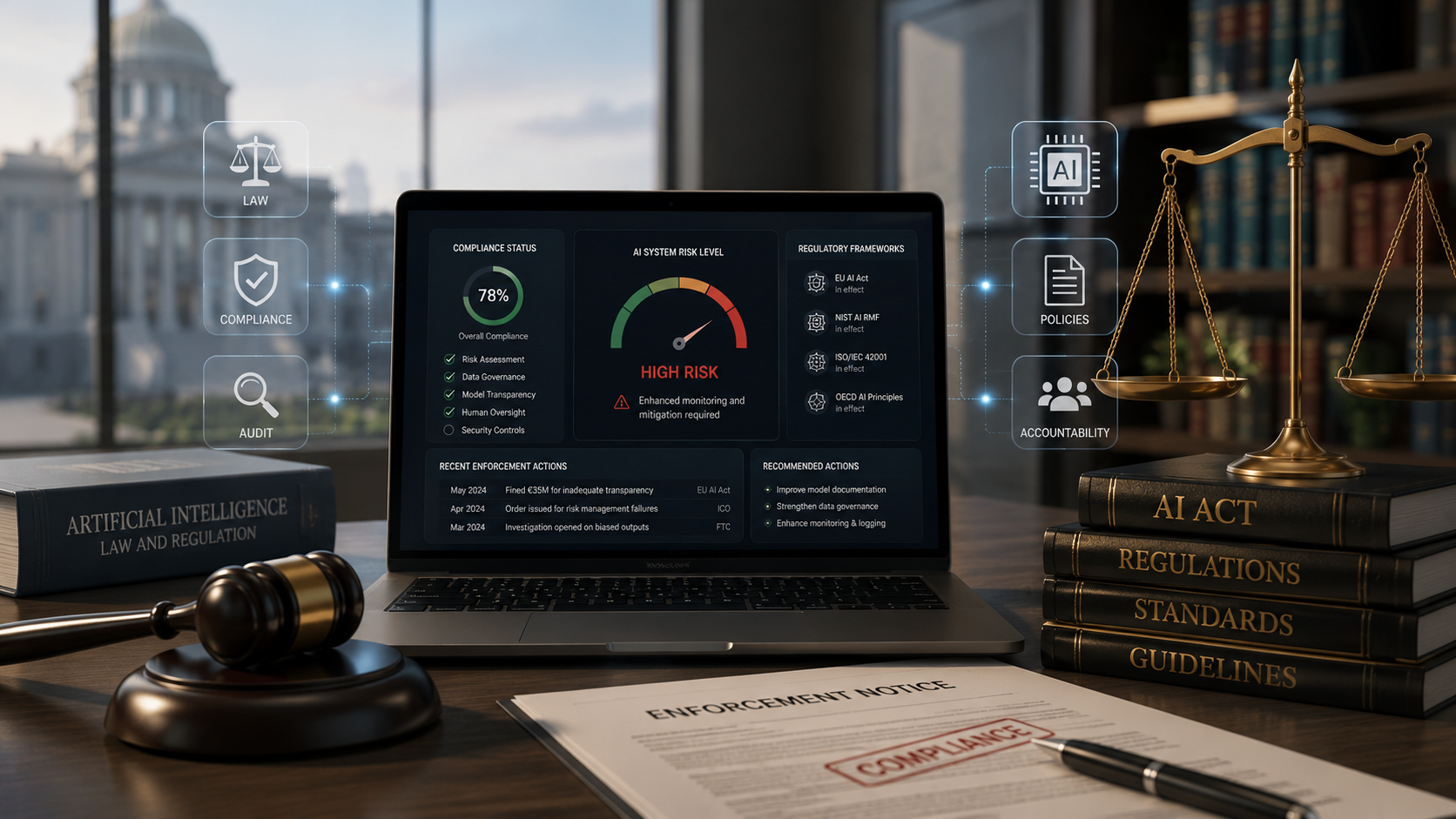
The timing matters because many enterprises still run governance as a policy-writing exercise while deploying more powerful models into customer-facing and employee-facing workflows. Enforcement pressure changes the standard. Organizations now need operating proof: consent handling, retention rules, model evaluation records, incident paths, prompt and action logging, and claims that can withstand legal scrutiny. For GCC-based enterprises, the implication is not that U.S. rules automatically apply, but that global partners, regulators, and customers are converging on a more evidence-based view of AI accountability.
How it works in practice
In practice, this means governance must move closer to the delivery pipeline. Risk reviews cannot sit only at procurement or legal sign-off. They need to show up in model selection, dataset handling, permission design, user disclosures, and post-deployment monitoring. Strong teams document what the system can do, what it must not do, which data classes it can access, how exceptions are escalated, and how policy changes are propagated across environments. The governing artifact is not a slide deck. It is an auditable control fabric across people, systems, and decisions.
Real-world examples
The OpenAI probe as a wake-up call
The June 2026 probe is one visible example of regulators demanding more direct evidence on data handling, safety claims, and operational controls.
EU AI Act pressure pattern
The EU AI Act and related scrutiny of automated decisioning reinforce the same message: governance has to be operational, not merely aspirational.
Platform vendors are adapting
Large model and cloud vendors are expanding enterprise logging, evaluation, and policy tooling because customers increasingly need defensible governance artifacts.
Cross-border enterprises feel it first
Organizations operating across jurisdictions are usually the first to discover that inconsistent evidence, weak logging, and fragmented approvals do not scale.
Pitfalls to avoid
- Assuming the model provider owns the risk Buying from a major vendor does not transfer accountability for use-case design, access choices, disclosures, or downstream harms.
- Focusing only on model behavior Business process risk matters just as much, especially when AI influences sales claims, service decisions, or exposure of sensitive data.
- Letting policy and systems drift apart If the written governance policy says one thing and the platform enforces another, that gap becomes visible quickly under audit or investigation.
- Treating logging as optional Without usable records of inputs, actions, approvals, and exceptions, enterprises cannot explain decisions six months later when scrutiny arrives.
Frequently asked questions
Conclusion
AI governance is no longer credible when it exists only as policy language. Enterprises now need evidence, enforceable controls, and operating discipline that stand up under scrutiny across jurisdictions and stakeholders.